Strength in Numbers: How Craft Wine and Spirits Producers Are Thriving Through the Art of Collaboration
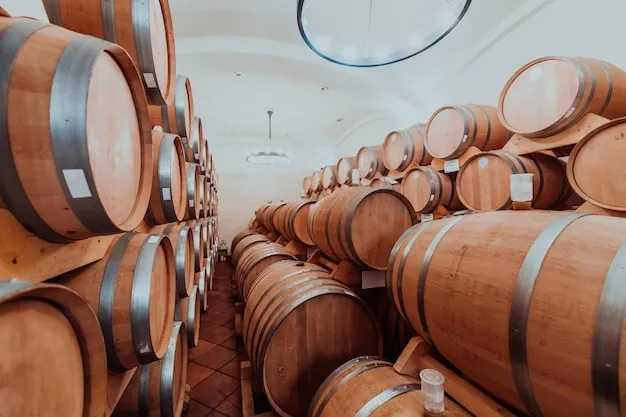
Photo: craft winery collaboration wine barrels cellar partnership, via img.freepik.com
There is an old instinct in the craft beverage world to guard one's methods jealously—to treat the recipe, the barrel source, the fermentation protocol as proprietary secrets worth protecting at all costs. Yet a growing number of American wine and spirits producers are proving that the opposite approach may yield far richer rewards. Across the country, from the Willamette Valley to the Hudson River corridor, independent makers are joining forces in ways that challenge conventional notions of competition, and the results are extraordinary.
The Architecture of a Productive Partnership
Collaboration in the craft beverage space rarely follows a single template. Some arrangements are purely logistical—two small wineries sharing a bottling line or a cold storage facility to reduce overhead without compromising their individual identities. Others are deeply creative, with producers co-developing limited releases that draw on each party's distinct expertise. Still others operate as loose networks of growers, distillers, and blenders who share knowledge, ingredients, and even customer bases in ways that benefit every participant.
What unites these varied arrangements is a shared recognition that independence and interdependence are not mutually exclusive. A craft distillery in Vermont, for instance, may source heritage rye from a neighboring farm cooperative, share aging warehouse space with two other small producers, and co-release a finished whiskey under a joint label—all while maintaining a completely distinct house style and brand voice. The collaboration is structural; the identity remains singular.
"We think of it less like merging and more like adding tentacles," says one Hudson Valley winemaker who asked to remain anonymous ahead of a forthcoming partnership announcement. "Each arm moves independently. Each one reaches somewhere different. But they're all connected to the same body, the same sensibility."
Co-Productions and the Question of Authenticity
For many consumers—and, frankly, for many producers—the idea of co-production raises an immediate concern: does working with another maker dilute what makes you distinct? It is a fair question, and the answer depends almost entirely on how the collaboration is structured and communicated.
The most successful co-productions tend to be those in which each producer's contribution is clearly defined and genuinely valued. Consider the model pioneered by several California natural wine producers who have begun releasing co-fermented bottlings—wines made from grapes grown by one producer and fermented using the winemaking protocols of another. The resulting bottles carry both names prominently and are marketed explicitly as dialogues between two distinct philosophies. Far from muddying the waters, these releases have attracted attention from collectors and critics precisely because they reveal something about each producer that a solo release cannot.
A similar dynamic is playing out in the American craft spirits sector. In the Pacific Northwest, a handful of small distilleries have begun pooling grain purchases and sharing fermentation vessels during their off-peak seasons, then separating their mashes before distillation to preserve individual house character. The arrangement reduces cost and waste for everyone involved, while the finished spirits remain as idiosyncratic as ever.
Shared Infrastructure, Individual Vision
Perhaps the most quietly transformative form of collaboration is the shared production facility—sometimes called a custom crush operation in the wine world, or a contract distillery in spirits. These spaces allow small producers to access equipment and expertise that would be financially out of reach on their own, without surrendering creative control over their products.
The model has matured considerably over the past decade. Early shared facilities were sometimes criticized for producing generic, interchangeable products that reflected the facility's defaults rather than the producer's intentions. Today's better-run operations function more like professional kitchens for rent: the equipment is available, the technical staff are skilled, but the menu—the recipe, the process, the vision—belongs entirely to the producer using the space.
This evolution has been particularly significant for first-generation producers from communities historically underrepresented in the wine and spirits industries. Access to shared infrastructure has lowered the capital barrier to entry, enabling a more diverse cohort of makers to bring their perspectives to market without requiring the kind of generational wealth that once served as an unofficial prerequisite for launching a serious wine or spirits brand.
The Business Case for Generosity
Beyond the philosophical arguments, the economic logic of strategic collaboration is increasingly difficult to ignore. Distribution, marketing, and compliance costs are among the most significant burdens facing small producers in the United States, and all three can be meaningfully reduced through partnership.
Several craft wine and spirits producers have begun approaching distribution collaboratively, grouping their portfolios under a shared sales representative or forming informal consortiums that present a broader, more attractive offering to wholesalers and retailers. A single small distillery may struggle to command shelf space at a discerning spirits retailer; three small distilleries presenting a cohesive regional story—each distinct, but united by geography or philosophy—present a far more compelling proposition.
Marketing, too, benefits from the collective approach. Joint tasting events, shared social media campaigns, and co-branded educational content allow producers to reach audiences that none of them could have cultivated independently. The audience that discovers one producer through a collaborative release often becomes a loyal customer of both.
What the Best Collaborations Protect
For all their advantages, collaborations carry real risks, and the producers who navigate them most successfully tend to be those who enter them with clear agreements, honest communication, and a firm sense of what they are not willing to compromise.
Quality standards are the most obvious point of potential friction. When two producers share a process, a disagreement about acceptable practices—the use of additives, the timing of a harvest, the proof at which a spirit is barreled—can damage both the product and the relationship. The most durable partnerships are those in which these standards are discussed explicitly before the collaboration begins, not negotiated in the heat of production.
Brand identity is the subtler concern. A producer who collaborates promiscuously risks becoming defined by their associations rather than their own work. The wisest approach, according to producers who have built lasting collaborative reputations, is to be selective—to choose partners whose values and quality standards genuinely align, and to approach each co-production as a meaningful creative statement rather than a commercial convenience.
The octopus, that most improbable of intelligent creatures, survives and thrives precisely because its arms can act with a degree of independence while remaining coordinated by a central intelligence. In the American craft beverage world, the producers who understand this principle—who extend themselves outward through collaboration without losing the animating vision at their core—are building something more resilient, more interesting, and more enduring than any of them could have achieved alone.