Reclaimed and Rooted: The American Producers Reviving Lost Ingredients to Redefine Regional Terroir

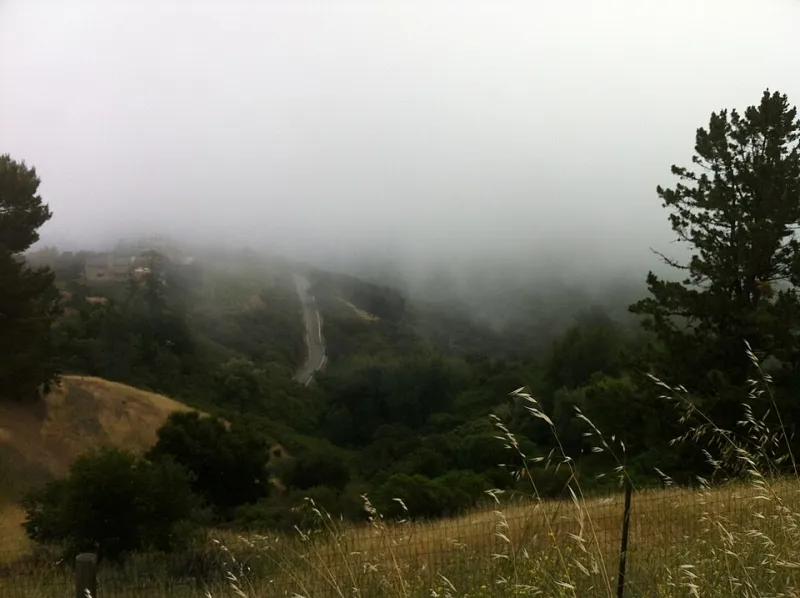
Photo: A Guy Named Nyal, CC BY-SA 2.0, via Wikimedia Commons
The word terroir has long carried a European accent. It conjures limestone slopes in Burgundy, volcanic soils in the Canary Islands, the particular maritime fog that settles over Champagne each autumn. American producers have spent decades making the case that the concept translates—that a Willamette Valley Pinot Noir or a Hudson Valley hard cider can express place as eloquently as any Old World benchmark.
But a growing cohort of winemakers and distillers is pushing that argument further, and in a more historically complex direction. They are asking not merely what the American land can produce today, but what it produced before—before industrial monoculture reshaped the agricultural map, before Prohibition severed the living chain of regional beverage tradition, before colonization displaced the Indigenous land stewardship practices that had cultivated these landscapes for thousands of years.
The answers they are finding, with the help of agricultural historians, ethnobotanists, and Native community partners, are reshaping what American terroir means—and what it could become.
The Grapes That Almost Disappeared
America's viticultural history is far more diverse than its current wine shelves suggest. Long before Cabernet Sauvignon and Chardonnay established their dominance, the continent supported an extraordinary range of native Vitis species and early hybrid varieties that European settlers encountered, cultivated, and, in many cases, eventually abandoned in favor of more commercially predictable options.
Varieties like Norton, Catawba, Lenoir, and Scuppernong were once central to American wine culture. Norton, in particular, was celebrated in the nineteenth century as the foundation of a distinctly American red wine tradition, with Missouri's Hermann wine region shipping bottles to European courts. The varietal never disappeared entirely—pockets of cultivation persisted in Virginia, Missouri, and Arkansas—but it was largely forgotten by mainstream wine consumers for much of the twentieth century.
That amnesia is now being actively reversed. Producers like Chrysalis Vineyards in Virginia have spent decades championing Norton as a flagship variety, producing wines of genuine complexity that bear little resemblance to the European archetypes most consumers use as reference points. The grape's high natural acidity, dark fruit character, and resistance to the humid mid-Atlantic climate make it not merely a curiosity but a genuinely compelling choice for the region.
Further south, the Muscadine grape—native to the American Southeast and deeply embedded in the foodways of communities from the Carolinas to Texas—is undergoing a similar reappraisal. Long dismissed as fit only for sweet, low-prestige wines, Muscadine is finding new advocates among producers who argue that the variety's thick skins, high resveratrol content, and assertive flavor profile reward thoughtful winemaking rather than punish it.
Indigenous Knowledge and the Ethics of Recovery
The recovery of native ingredients is not a straightforward act of historical preservation. It is, when undertaken responsibly, a process that requires genuine partnership with the communities whose knowledge and stewardship made these ingredients possible in the first place.
Across the country, a number of producers are approaching this work with the seriousness it demands. In the Pacific Northwest, distilleries working with camas root, huckleberry, and other botanicals that are central to the food cultures of regional tribes have established formal consultation and revenue-sharing arrangements with tribal nations. The goal is not appropriation dressed as homage but reciprocal relationship—ensuring that the communities who maintained these ingredients through generations of land stewardship share materially in their commercial revival.
Similarly, in the Southwest, producers exploring fermented agave traditions that predate European contact have worked with Tohono O'odham and other Indigenous communities to understand the cultural context of these practices before attempting to adapt them for contemporary production. The distinction between respectful engagement and extractive borrowing is not always easy to navigate, but the producers doing this work most credibly are those who treat it as an ongoing conversation rather than a one-time consultation.
"We don't own this knowledge," said one New Mexico distiller working with heritage blue corn varieties at a 2024 beverage symposium. "We're stewards of a particular piece of it, for a particular moment. That requires humility."
Foraged Botanicals and the New American Still
Beyond grape varieties and native fruits, a parallel movement is transforming American spirits production through the incorporation of foraged and cultivated botanicals that speak to specific regional ecologies.
In Appalachia, distillers are drawing on the extraordinary botanical richness of the eastern hardwood forest—ramps, black walnut, spicebush, pawpaw—to create whiskies and liqueurs that carry the sensory imprint of a specific landscape. These are not novelty releases designed to attract Instagram attention. The most serious among them are the product of years of experimentation, often conducted in collaboration with foragers, herbalists, and ecologists who understand both the flavor potential and the ecological limits of harvesting wild ingredients at scale.
The pawpaw, in particular, has emerged as something of a symbol for this movement. North America's largest native fruit, once widespread across the eastern United States and deeply embedded in the diets of Indigenous peoples and early European settlers alike, nearly vanished from commercial agriculture in the twentieth century. Its perishability made it incompatible with industrial supply chains. But for distillers and fermenters willing to work within its constraints—harvesting at peak ripeness, processing quickly, accepting the irregularity that wild or semi-wild cultivation entails—the pawpaw offers a flavor profile unlike anything imported: tropical and custard-like, with a richness that translates beautifully into brandy and fruit wine.
Agricultural Historians as Collaborators
The intellectual infrastructure supporting this ingredient revival is as important as the agricultural work itself. A growing network of food historians, seed librarians, and academic researchers is providing producers with the historical context they need to understand what they are recovering and why it matters.
Organizations like the Slow Food USA Ark of Taste—which catalogs endangered American food products, including wine grapes and fermentation ingredients—have become essential resources for producers seeking to ground their work in documented tradition rather than invented nostalgia. The distinction matters: a spirit or wine that can trace its ingredient lineage to a specific regional agricultural history carries a different kind of authenticity than one that simply markets itself as "heritage" without the evidence to support the claim.
Several university viticulture programs, including those at Cornell and UC Davis, have launched dedicated initiatives to study and preserve heirloom American grape varieties, providing producers with access to genetic material and agronomic knowledge that would otherwise be inaccessible.
Drinking the Deep Story
For the consumer, all of this work culminates in bottles that offer something increasingly rare in a beverage market saturated with global brands and standardized flavor profiles: genuine specificity. A wine made from Norton grapes grown in Virginia clay, or a brandy distilled from pawpaw harvested in an Ohio river valley, or a botanical spirit informed by Ojibwe plant knowledge from the Great Lakes region—these are not merely beverages. They are arguments about what American identity tastes like when it is allowed to reach below the surface.
At Eight Arms Cellars, we believe that the most extraordinary bottles are those that reward curiosity with depth. The movement to reclaim lost ingredients and forgotten varieties is, at its core, an act of that same curiosity—extended not just across a cellar, but across centuries of American agricultural and cultural history.
The story in the glass, it turns out, has always been longer than we imagined.