Roots and Rain: How Appalachian and Pacific Northwest Winemakers Are Forging a New American Identity
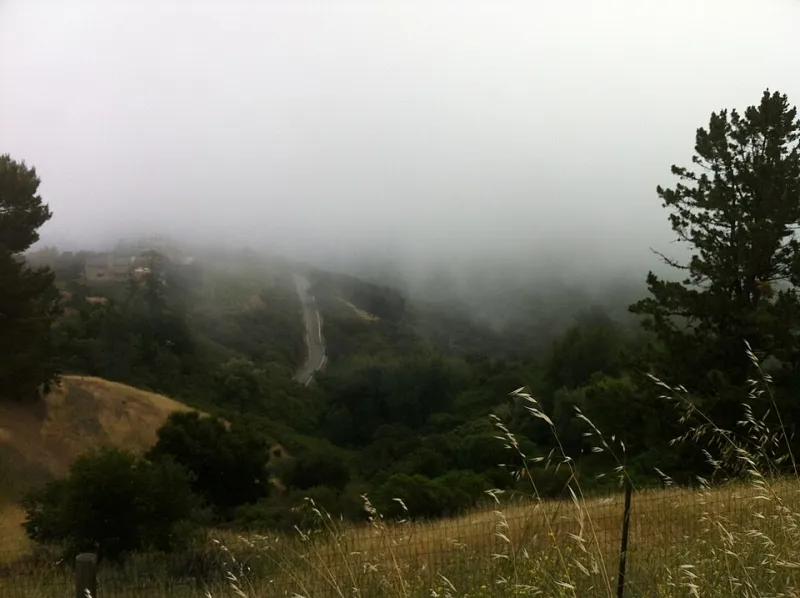
Photo: Agne27, CC BY-SA 3.0, via Wikimedia Commons
The word terroir has always carried a faint air of European exclusivity — as though the concept of place expressing itself through wine were a privilege reserved for the limestone plateaus of Burgundy or the volcanic soils of the Canary Islands. American winemakers, particularly those working outside California's well-documented appellations, have spent decades quietly dismantling that assumption. Nowhere is this work more compelling, or more underappreciated, than in the mountain vineyards of the Appalachian range and the cool, fog-laced growing corridors of the Pacific Northwest.
These are not backup regions for the wine enthusiast who cannot afford Napa. They are distinct, irreducible places producing wines that could not have been made anywhere else — wines that carry the signature of their soils, their altitude, and their particular relationship with rain, cold, and the slow rhythm of mountain seasons.
What Terroir Actually Means in an American Context
Before exploring specific regions, it is worth pausing on the concept itself. Terroir, at its most precise, describes the totality of environmental factors that shape a wine's character: soil composition and drainage, elevation and aspect, diurnal temperature variation, precipitation patterns, and the microbial life that inhabits both vineyard and cellar. It is not merely a marketing term. It is a framework for understanding why two wines made from the same grape varietal, fermented by equally skilled winemakers, can taste entirely unlike one another.
In the American context, terroir carries an additional layer of meaning. Many of the country's most compelling emerging wine regions are working with hybrid grape varieties — crosses developed specifically to thrive in climates that would defeat vinifera — or with cold-hardy vinifera strains selected over decades of careful trial. The result is a category of wines that require the taster to set aside Old World reference points entirely and engage with what is actually in the glass.
The Appalachian Highlands: Altitude, Acidity, and Ambition
The mountains of Virginia, North Carolina, and Georgia do not immediately suggest wine country. Yet the evidence accumulating in these high-elevation vineyards is difficult to ignore. The key factor is altitude. Vineyards planted above 2,000 feet in the Blue Ridge and Allegheny ranges benefit from cool nights that preserve acidity and extend the growing season, allowing grapes to develop phenolic complexity without sacrificing freshness.
Virginia's Shenandoah Valley AVA and the newer Rocky Knob AVA in the Blue Ridge Highlands are producing Cabernet Franc and Petit Verdot of notable quality — varietals that struggle in Virginia's humid Piedmont but find their footing in the cooler, better-drained mountain soils. Barboursville Vineyards, one of the state's most historically significant producers, has demonstrated over thirty years of vintages that Nebbiolo — a grape so demanding it barely thrives outside its native Piedmont — can produce wines of genuine structure and longevity in the right Appalachian microclimate.
Further south, the burgeoning wine scene centered around Asheville, North Carolina is drawing attention for a different reason: its embrace of hybrid varieties such as Traminette and Vidal Blanc, which produce aromatic whites of surprising elegance. Addison Farms Vineyard in Canton has been particularly noteworthy, crafting dry Traminette with the kind of floral precision and mineral finish that invites comparison to an Alsatian Gewurztraminer — high praise, and in this writer's assessment, not undeserved.
Pacific Northwest: The Geography of Cool
Washington State's wine identity has long been framed in terms of its eastern desert appellations — the Columbia Valley, Walla Walla, the Horse Heaven Hills — where warm summers and volcanic soils produce powerful, fruit-driven reds that compete credibly with California's finest. But a different Washington is emerging in the cooler corridors west of the Cascades and in the elevated benchlands of the Yakima Valley's northern reaches.
The Puget Sound AVA, Washington's westernmost wine region, operates under entirely different climatic logic. Marine influence, moderate temperatures, and significant rainfall create conditions better suited to aromatic whites and cool-climate reds than to the bold Cabernets of the Columbia Basin. Madsen Family Cellars and Lopez Island Vineyards have demonstrated that Siegerrebe, Madeleine Angevine, and Müller-Thurgau — varietals more commonly associated with Germany and Alsace — can produce wines of genuine delicacy and terroir-driven character in this maritime environment.
Oregon, meanwhile, continues to refine its already established identity as a world-class Pinot Noir producer, but the most exciting developments are occurring at the margins. The Applegate Valley in southern Oregon, with its warmer, drier climate, is producing Tempranillo and Grenache that bear little resemblance to their Willamette Valley counterparts — earthier, more structured, with a savory quality that pairs magnificently with grilled lamb and aged hard cheeses. The Rocks District of Milton-Freewater, a sub-appellation of Walla Walla straddling the Oregon-Washington border, has attracted international attention for its basalt cobblestone soils, which impart a distinctive mineral and iron-rich quality to Syrah that has prompted comparisons — not entirely fanciful — to the northern Rhône.
A Practical Roadmap for the Curious Enthusiast
For the reader ready to explore beyond familiar appellations, the following approach is recommended.
Begin with Virginia Cabernet Franc from the Blue Ridge Highlands. It offers an accessible entry point — a varietal profile familiar to most wine enthusiasts, expressed through a distinctly American lens of mountain-grown freshness and restrained fruit. A bottle from RdV Vineyards or Early Mountain Vineyards will provide an immediate sense of what Appalachian terroir can achieve.
Advance to Oregon's Applegate Valley for a Tempranillo that will likely surprise in its structural complexity and value. Producers such as Troon Vineyard are making wines at price points well below their quality tier — a consequence of the region's relative obscurity, which works entirely in the consumer's favor.
Close with a Washington Syrah from The Rocks District. This is wine that demands contemplation: the combination of volcanic mineral intensity, dark fruit, and savory, iron-tinged earthiness produces an experience that is irreducibly specific to this small patch of American soil. It is, in the truest sense of the word, terroir in a glass.
The Case for American Regionalism
What unites these diverse regions is not a shared style or a common varietal — it is a shared commitment to place. The winemakers working in Appalachian hollows and Pacific Northwest river valleys are not attempting to replicate Burgundy or Rioja. They are attempting to understand their own land, to listen to what their soils and climates are asking of them, and to translate that conversation into wine.
For the connoisseur willing to approach these bottles with an open mind and a willingness to set aside preconceptions, the rewards are considerable: wines of genuine character, exceptional value, and a sense of place that no amount of technical sophistication can manufacture. That is, ultimately, what the finest wines have always offered — and American winemakers, in these remarkable and undersung regions, are delivering it with increasing authority.