Beyond the Label: Five American Craft Distilleries Rewriting the Rules of Classic Spirits
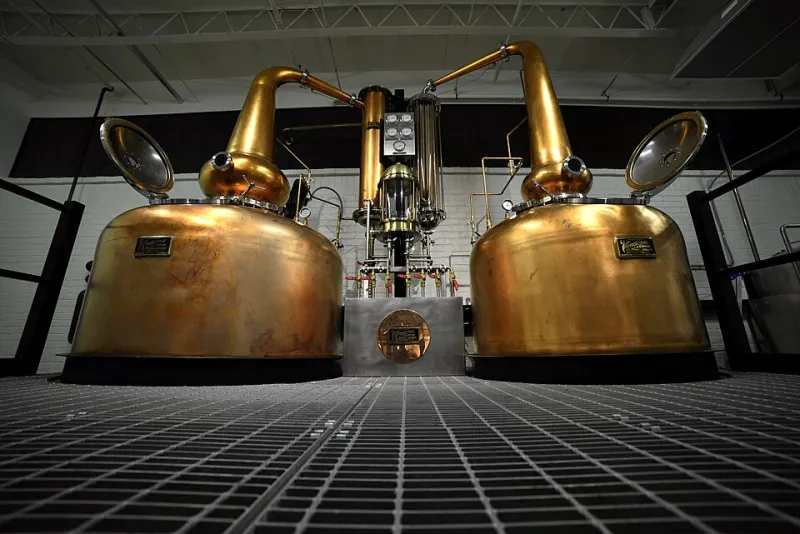
Photo: Thechadwix, CC BY-SA 4.0, via Wikimedia Commons
For most of the twentieth century, the American spirits landscape operated according to a set of unspoken rules. Bourbon was bourbon. Gin was gin. Vodka, by federal definition, was meant to be without distinctive character. The categories held firm, reinforced by tradition, regulation, and the conservative tastes of a market that preferred familiarity to surprise.
That consensus is dissolving. Across the country, a cohort of craft distillers — many of them trained in culinary arts, fermentation science, or fine winemaking before they ever touched a still — are approaching their craft with a different philosophy. They are asking not what a spirit is supposed to be, but what it could become. The results are some of the most intellectually stimulating bottles to emerge from American distilling in a generation.
The Distiller as Innovator
To understand this movement, it helps to appreciate what separates genuine craft innovation from novelty. Flavored vodkas and seasonal whiskey releases have populated liquor store shelves for decades without meaningfully advancing the conversation. What distinguishes the producers profiled here is intentionality. Each technique — whether it involves secondary barrel aging, alternative grain bills, or unconventional botanical sourcing — serves a specific sensory purpose. The distiller begins with a desired flavor profile and works backward through process, rather than arriving at a product by accident or marketing committee.
This distinction matters to connoisseurs. When a spirit earns credibility in serious tasting rooms, it is rarely because of its story alone. It is because the liquid in the glass delivers on the promise of its concept.
Five Producers Worth Your Attention
Copperworks Distilling Co. — Seattle, Washington
Copperworks began as a craft beer operation before its founders applied malting and fermentation expertise to distilling. Their American Single Malt Whiskey releases demonstrate what happens when a distillery treats grain selection with the same reverence a winemaker might apply to varietal choice. Their Release No. 036, aged in a combination of new American oak and ex-Scotch casks, presents a layered profile of toasted brioche, dried apricot, and a long finish of salted caramel that refuses easy categorization. It is neither Scotch nor bourbon — it is something distinctly American, and distinctly Pacific Northwest.
Corsair Distillery — Nashville, Tennessee
Few American craft producers have been as systematically adventurous as Corsair. Their Quinoa Whiskey alone — produced from a grain virtually absent from traditional distilling — signals a willingness to interrogate assumptions. More compelling still is their Smoked Grain Whiskey, which employs cherry wood-smoked malt to produce a spirit with the structural weight of a well-aged rye and the aromatic complexity of a fine Islay expression. Paired alongside a charcuterie board featuring aged country ham and spiced pecans, it performs magnificently, the smoke acting as a bridge rather than an obstacle.
St. George Spirits — Alameda, California
One of the earliest serious craft distilleries in the United States, St. George has spent four decades earning its reputation for methodical experimentation. Their Baller Single Malt Whiskey — aged in bourbon barrels and finished in Sauternes wine casks — reads as a provocation and delivers as a triumph. The interplay between the vanilla-forward American oak influence and the honeyed, botrytized sweetness of the French wine cask produces a whiskey that occupies genuinely new sensory territory. It pairs with uncommon elegance alongside a wedge of aged Comté or a dark chocolate ganache with orange zest.
Watershed Distillery — Columbus, Ohio
Watershed's Bourbon is distinguished not by radical technique but by the deliberate inclusion of oats in its grain bill — an unusual choice that softens the spirit's texture without sacrificing structural complexity. The result is a bourbon of unusual creaminess, with notes of warm oatmeal, clover honey, and a whisper of white pepper on the finish. For readers accustomed to the assertive heat of high-rye expressions, Watershed's approach offers a compelling alternative: a bourbon that is immediately approachable yet rewards careful attention.
Westward Whiskey — Portland, Oregon
Westward occupies a fascinating intersection between craft beer culture and American whiskey tradition. Their flagship Single Malt is produced from a craft ale base — a living mash fermented with ale yeast — before double pot distillation and aging in new American oak. The ale fermentation imparts a fruity, ester-rich quality that distinguishes the spirit from both conventional American whiskeys and Scottish single malts. Their Stout Cask finish, in which the whiskey rests in barrels previously used to age imperial stout, introduces notes of roasted coffee, dark cherry, and bitter chocolate that are as compelling as anything produced in a traditional whiskey region.
Why This Matters to the Connoisseur
The credibility these producers have accumulated is not merely a function of novelty. Copperworks and Westward have both won recognition at the American Distilling Institute and the San Francisco World Spirits Competition. St. George has long held a reputation among bartenders and spirits writers as one of the most technically rigorous operations in the country. These are not garage operations chasing press coverage — they are serious craft enterprises applying genuine expertise to the project of expanding what American spirits can mean.
For the collector and the enthusiast alike, the practical implication is clear: the most rewarding bottles on the American market are no longer confined to the bourbon aisle. They are scattered across categories that barely existed a decade ago, produced by distillers who are as likely to cite a winemaker or a brewer as an influence as they are a classic Kentucky master distiller.
Pairing Notes and Cellar Recommendations
For those ready to build a cellar that reflects the full ambition of contemporary American distilling, we recommend approaching these spirits with the same framework applied to fine wine. Consider provenance — the Pacific Northwest's cool, maritime climate imparts a particular restraint to grain-forward spirits. Consider technique — barrel finishing with wine casks introduces tannin structures and residual sugar notes that demand thoughtful food pairings. And consider evolution: many of these expressions change meaningfully in the glass over twenty to thirty minutes, revealing complexity that rewards patience.
A suggested introductory flight: open with the Watershed Bourbon alongside mild cheese and roasted almonds, advance to the St. George Baller with dark chocolate and dried fig, and close with the Westward Stout Cask alongside a square of 72% cacao. The progression maps a journey from familiar comfort to genuine discovery — which is, ultimately, what the best spirits have always promised.