Wild at Heart: Eight Spanish Producers Turning Natural Wine Into an Art Form
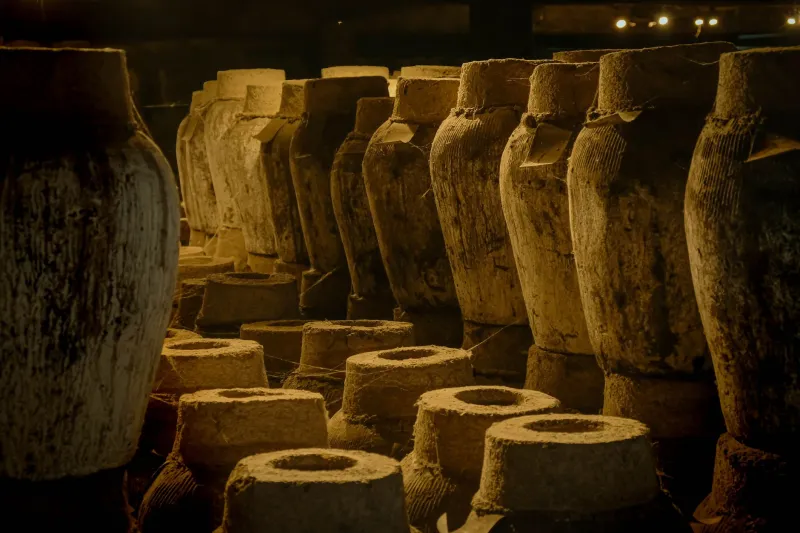
Spain has never been shy about contradiction. It is a country that gave the world both the rigid architectural precision of Rioja's Gran Reserva and the anarchic, sun-baked expressionism of Priorat's old-vine Garnacha. Yet for all its celebrated diversity, the Iberian peninsula's most provocative chapter may be unfolding right now, in cellars where sulfur additions are measured in micrograms, where amphorae replace barrique, and where the winemaker's greatest skill is knowing when to do absolutely nothing.
At Eight Arms Cellars, we have long admired the bold and the unconventional — creatures that thrive by adapting, by sensing their environment, by moving with intelligence through uncertain waters. Spain's natural wine producers possess exactly that sensibility. Below, we profile eight of the most compelling voices in Iberian natural winemaking, each offering something that will challenge, delight, and occasionally unsettle even the most experienced palate.
What "Natural" Actually Means in a Spanish Context
Before diving into producers, a brief clarification is warranted. The term "natural wine" carries no legally protected definition in Spain or the United States, which means it is applied liberally — and sometimes cynically. For the purposes of this feature, we define natural wine as wine produced from organically or biodynamically farmed fruit, fermented with indigenous yeasts, and bottled with little to no added sulfur dioxide. The results range from crystalline and precise to deliberately funky and oxidative. Palates accustomed to the polished consistency of conventional wine may find some of these bottles disorienting at first. That is, in large part, the point.
Partida Creus — Penedès
Founded by Italian ex-pats Massimo Marchiori and Antonella Gerosa, Partida Creus operates out of a small village in Penedès with a philosophy that borders on the philosophical. They work with obscure indigenous varieties — Sumoll, Xarel-lo Vermell, Garrut — that most producers abandoned decades ago. Their wines are textural, saline, and often deeply strange in the most rewarding sense. The VS Vinel-lo is an ideal entry point: a pét-nat of uncommon energy that pairs beautifully with cured meats or simply a long conversation.
Comando G — Sierra de Gredos
The Sierra de Gredos, a granite mountain range west of Madrid, has become Spain's most talked-about natural wine terroir, and Comando G deserves significant credit for that reputation. Fernando García and Marc Isart produce Garnacha of extraordinary tension — wines that feel simultaneously ancient and urgent. La Bruja de Rozas is their benchmark bottling: pale-ruby, high-acid, and hauntingly mineral in a way that challenges everything you thought you knew about the grape.
Envínate — Various Spanish Regions
Four enology graduates — Roberto Santana, Alfonso Torrente, Laura Ramos, and José Martínez — formed Envínate with the explicit goal of exploring Spain's most underrepresented wine territories. They work across the Canary Islands, Ribeira Sacra, and Extremadura simultaneously, producing wines that read like field dispatches from the frontier. Their Táganan Blanco from Tenerife, made from a field blend of indigenous varieties on steep volcanic terraces, is one of the most intellectually stimulating white wines produced anywhere in the world today.
Alfredo Maestro — Ribera del Duero
In a region synonymous with powerful, oak-forward Tempranillo, Alfredo Maestro is a deliberate anomaly. He farms biodynamically, ferments in clay, and bottles without filtration or added sulfur. The wines are lean, earthy, and deeply expressive of their granite and limestone soils. His Viña Almate offers a compelling counterargument to the blockbuster style that made Ribera del Duero famous — and it ages with remarkable grace.
Costador Terroirs Mediterranis — Catalonia
Joan Ramon Escoda brings a craftsman's precision to natural winemaking, working with ancient Garnacha and Sumoll vines in Catalonia's interior. His Metamorphika series explores a single variety across different soil types, offering something close to a scientific study of terroir — yet the wines drink with warmth and generosity rather than academic austerity. For American consumers curious about Spanish natural wine but wary of excessive volatility, Costador is an ideal first port of call.
Bodegas Verónica Ortega — Bierzo
Bierzo's Mencía grape, grown on slate and quartzite soils in northwestern Spain, produces wines of haunting aromatics and cool-climate precision. Verónica Ortega, one of the region's most celebrated young producers, farms her parcels with obsessive care and intervenes minimally in the cellar. Her Con Un Par is a wine of genuine elegance: floral, savory, and possessed of a silky texture that belies its modest price point.
La Perdida — Ribeira Sacra
Alberto Orte and Xosé Lois Sebio produce wines from Ribeira Sacra's dramatically steep terraced vineyards — landscapes so demanding that harvesting by hand borders on the heroic. Their Mencía and Godello bottlings are defined by extraordinary freshness and a mineral salinity that seems to carry the mist of the Sil River valley in every sip. O Puntal dos Carrisos is a must-seek for any serious natural wine enthusiast.
Frank Cornelissen — A Spanish Footnote Worth Noting
Strictly speaking, Frank Cornelissen is a Belgian producer working in Sicily, not Spain. Yet his influence on Iberian natural winemakers — his radical commitment to zero additions, his amphora work, his insistence on terroir transparency — is so pervasive that no survey of the natural wine landscape would be complete without acknowledging him. Many of the Spanish producers listed above cite Cornelissen as a touchstone. His ideas, like the creature in our brand's name, extend their reach far beyond their point of origin.
Finding These Wines in the United States
Importing natural wine from small Spanish producers requires some effort, but the infrastructure has improved considerably. Importers such as Jenny & François Selections, Zev Rovine Selections, and Selections de la Vigne have built strong portfolios of Iberian natural wine with good distribution across major US markets. New York, Los Angeles, Chicago, and Portland maintain particularly robust retail and restaurant selections. For those outside major metropolitan areas, retailers like K&L Wine Merchants and Wine.com ship nationally and carry an increasing number of these bottles.
A Final Word on Expectation
Natural wine asks something of the drinker that conventional wine does not: a willingness to encounter variation, even imperfection, as a feature rather than a flaw. A bottle opened today may taste subtly different from the same bottle opened six months hence. Temperature, time, and oxygen all play roles that conventional winemaking attempts to suppress. In embracing these variables, Spain's natural wine producers are not making lesser wine — they are making more honest wine. For those prepared to meet them on those terms, the rewards are extraordinary.