Many Waters, One Voice: The Art and Logic of Multi-Regional Sourcing in American Craft Production
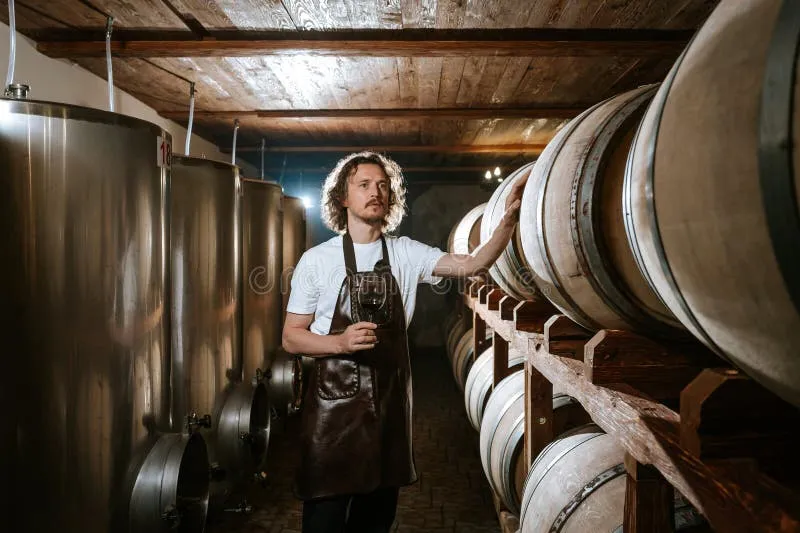
Photo: craft winemaker examining multiple wine barrels in cellar blending room, via thumbs.dreamstime.com
There is a persistent myth in the world of craft beverages — that authenticity is synonymous with singular origin. That the truest expression of a winemaker's or distiller's vision must be rooted in one plot of land, one aquifer, one growing season. It is a romantic notion, and not entirely without merit. But across the United States, a thoughtful countermovement is quietly dismantling that assumption, one carefully sourced barrel and vineyard block at a time.
Call it the reach of many arms: small-batch producers who have learned to extend their creative vision across state lines, mountain ranges, and microclimates — not to obscure their identity, but to deepen it.
The Case Against Insularity
For much of the modern craft revival, localism was the organizing principle. Distilleries trumpeted their estate-grown grains. Winemakers leaned hard into single-vineyard designations. The message was clear: proximity equals integrity.
But the producers who have been at this long enough to accumulate hard-won lessons will tell you something different. Insularity, unchecked, can become a ceiling.
"There are things that the Ozarks simply cannot give me," says one Arkansas-based distiller who sources heritage corn from Appalachian Kentucky and malted barley from the Pacific Northwest. "And the moment I accepted that, my whiskey got better. Not less mine — better."
This sentiment echoes across the country, from craft wineries in the Texas Hill Country sourcing Tempranillo from both their home state and from Washington's Yakima Valley, to Vermont cideries drawing on heirloom apple varieties from New York's Hudson Valley to supplement their own orchards. The logic is not one of compromise. It is one of composition.
Relationships as Infrastructure
What separates the producers who execute multi-regional sourcing gracefully from those who merely assemble a patchwork of ingredients is, almost universally, the depth of their supplier relationships.
At a small blending house in central California — one that sources Grenache from Paso Robles, Carignan from the Sierra Foothills, and old-vine Zinfandel from Lodi — the winemaker describes her grower network as the true architecture of her brand. "I've been visiting some of these vineyards for eleven years," she explains. "I know which blocks get stressed in August. I know which growers will call me at six in the morning because they noticed something in the canopy. That's not a transaction — that's a collaboration."
This relational infrastructure is what allows such producers to maintain consistency across wildly different terroirs. When a difficult vintage diminishes one source, a trusted grower in a different region may provide the compensating element — not as a fallback, but as a planned variable in a larger equation.
For distillers, the calculus is similar but complicated by the additional variable of time. A Kentucky-based craft distillery that sources rye from North Dakota, corn from Tennessee, and wheat from Montana cannot simply pivot when a harvest underperforms. The grain that enters the still today will not be evaluated in a glass for three to seven years. Multi-regional sourcing in spirits is, in this sense, an exercise in long-range trust.
The Blending Room as Creative Studio
Perhaps the most underappreciated dimension of thoughtful multi-sourcing is what happens after the ingredients arrive. The blending room — whether it contains wine thief and barrel samples or a row of cask-strength spirits — is where regional diversity is either woven into coherence or left to compete with itself.
Several of the most admired producers working in this space describe their approach in terms that sound less like quality control and more like musical composition. A blender in the Pacific Northwest who works with both Oregon and Idaho fruit speaks of "finding the key" — the component that determines what role every other element will play. "Sometimes it's the Walla Walla Syrah that sets the tone," he says. "Other years, it's the Willamette Pinot Noir that has the most to say. My job is to listen before I lead."
This kind of attentiveness — to season, to source, to the specific voice of each ingredient — is what prevents multi-regional sourcing from becoming mere aggregation. The producer is not assembling a greatest-hits collection. They are writing an original score.
Transparency as a Brand Value
One of the more striking developments among the most credible multi-sourcing producers is a commitment to radical transparency. Rather than obscuring the geographic complexity of their products behind a single brand narrative, they are leaning into it — publishing sourcing maps, naming growers on back labels, and hosting tasting events that walk consumers through the regional components in a finished blend.
This approach reflects a sophisticated reading of the contemporary American consumer, who is increasingly curious about supply chains and increasingly skeptical of vague provenance claims. When a distillery in the Hudson Valley publishes the farm origins of every grain in its bourbon mash bill, it is not just being forthcoming. It is making an argument: that knowing where something comes from makes it more meaningful, not less.
The same logic applies in wine. A Texas winery that sources from three different American Viticultural Areas and names each one prominently on its label is not admitting to a lack of local identity. It is asserting a broader one — that of a producer confident enough in its own vision to draw from wherever the best raw material lives.
What Authenticity Actually Means
The producers who have most successfully navigated multi-regional sourcing share one defining quality: they have a clear and stable sense of what their brand is trying to say, independent of geography. Their identity is not housed in a single appellation or a single grain field. It lives in a philosophy — a set of aesthetic commitments that remain constant even as the inputs shift.
This is, in the end, what the most interesting American craft producers are demonstrating: that authenticity is not a place. It is a point of view. And a point of view, held with sufficient conviction and executed with sufficient skill, can accommodate the full breadth of this country's remarkable agricultural diversity without losing a single degree of its integrity.
The arms may reach far. The voice, at its best, remains singular.