Same Source, Different Story: What Happens When Eight Distillers Reach Into the Same Barrel
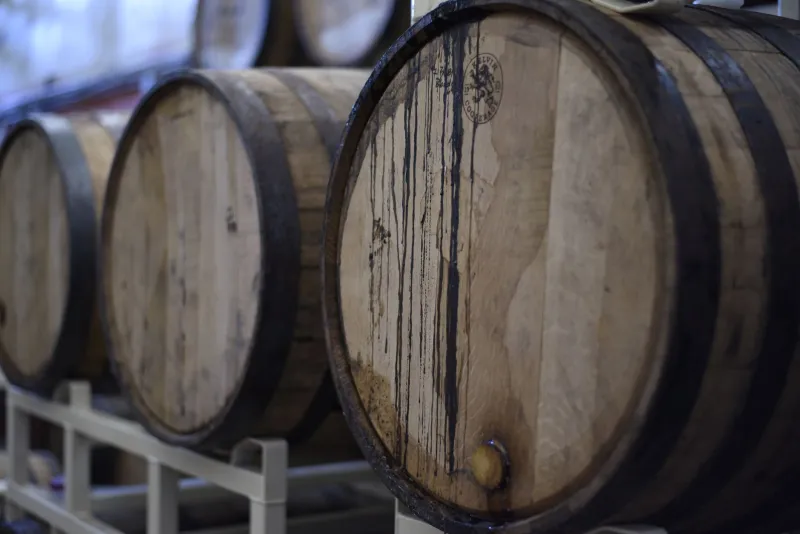
There is a thought experiment that serious spirits collectors occasionally pose to one another at the end of a long tasting: if eight distillers received identical barrels of the same aged bourbon, filled from the same mash bill, coopered by the same craftsman, and stored for the same duration — would the bottles on the other end taste anything alike?
The answer, for anyone who has spent meaningful time in American craft distilling, is an emphatic no. And that divergence is precisely where the most instructive story about modern American spirits begins.
The Shared Origin
For the purposes of this exploration, consider a single point of provenance: a cooperage in the Missouri Ozarks, producing #3 char white oak barrels from timber harvested within a fifty-mile radius. This cooperage supplies barrels to dozens of craft producers across the country — from a micro-distillery in Vermont drawing on heritage rye to a California operation aging a rice-based spirit in search of something entirely unclassifiable.
The barrel itself is neutral in intent. It carries the ghost of fire and wood, the latent chemistry of lignin and hemicellulose, the potential for vanilla, caramel, and spice that every distiller hopes to coax forward. But potential is not destiny. What the distiller brings to that barrel — the proof at entry, the warehouse orientation, the ambient temperature swings, the patience or impatience of the producer — determines everything that follows.
This is what we at Eight Arms Cellars call the Octopus Effect: a single source extending outward through multiple hands, each arm reaching into the same origin and returning with something unmistakably its own.
Provenance as Foundation, Not Conclusion
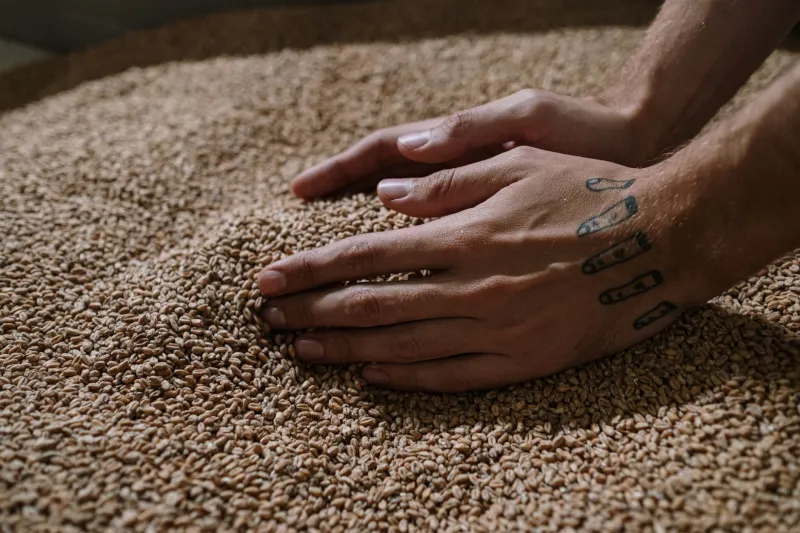
The craft spirits conversation in America has, over the past decade, leaned heavily into the language of terroir — a concept borrowed from wine that implies geography and raw material are destiny. There is genuine merit to this framing. A distiller working with heirloom Bloody Butcher corn grown in Virginia's Shenandoah Valley is working with something irreplaceable. The soil composition, the rainfall patterns, the specific microbial environment of that harvest — these elements do arrive in the still.
And yet, two distillers working with grain from the same farm can produce spirits that share almost no sensory common ground. One might run a slow, low-yield pot still distillation designed to preserve congeners and amplify the grain's natural sweetness. Another might push for a cleaner, higher-proof new make before returning complexity through barrel aging. A third might introduce the grain into a solera-style aging program that folds in older distillate, obscuring the origin almost entirely.
Provenance, in other words, is foundation — not conclusion. It sets the floor of what is possible. The distiller's philosophy determines the ceiling.
Eight Approaches to the Same Question
Consider how dramatically technique reshapes a shared ingredient when examined across a range of American producers currently working with sourced or collaboratively produced distillate.
A producer in Colorado might receive new make whiskey from a contracted grain-to-glass operation in Kentucky, then finish it in Amontillado Sherry casks for eighteen months. The result speaks far more of Andalusia than Appalachia. A Hudson Valley distillery receiving the same new make might choose to age it in smaller, three-gallon barrels exposed to the dramatic temperature variance of a stone warehouse — producing a spirit that is simultaneously young and hyperconcentrated, with tannin levels that challenge the definition of approachability.
Move further west, and a Pacific Northwest producer might blend that same base whiskey with a portion of their own estate-grown barley distillate, creating a hybrid expression that splits the difference between American and Scotch-influenced production philosophy. The sourced component becomes nearly invisible, subordinated to the producer's overarching house style.
In each case, the shared origin is real. Its influence, however, is filtered through intention — and intention varies as widely as the geography that separates these producers.
What the Collector Should Actually Be Asking
For the serious American spirits collector, this line of inquiry has practical consequences. The question "where does this come from?" is meaningful, but it is incomplete. The more revealing question is: "What did the producer choose to do with it, and why?"
Transparency in American craft spirits has improved substantially over the past several years. Producers who source distillate — a practice that remains entirely legal and, when handled with integrity, entirely legitimate — are increasingly forthcoming about that relationship. What they are less often asked to articulate is the specific set of decisions that transformed a purchased commodity into a finished expression bearing their name.
Those decisions are the story. The barrel selection, the blending rationale, the aging environment, the proof at bottling — these are the variables that differentiate a thoughtful producer from one simply affixing a label to someone else's work. A collector who understands this distinction will navigate the American craft market with considerably more confidence.
The Case for Embracing Complexity
There is a temptation, particularly among connoisseurs steeped in Old World wine tradition, to privilege purity of origin above all else. The single-vineyard Burgundy. The estate-grown single malt. The farm-to-bottle bourbon from a producer who grows every kernel of grain in sight of the still. These expressions carry a certain philosophical coherence that is genuinely appealing.
But American craft spirits have never been entirely comfortable with that framework — and perhaps they should not be. The tradition of blending, of sourcing, of collaboration across state lines and production philosophies, is as authentically American as any other aspect of this industry. The great American blenders of the nineteenth century were not diminished by the complexity of their supply chains. They were defined by what they chose to do with them.
The Octopus Effect, then, is not a cautionary tale about diluted provenance. It is, rather, an argument for the primacy of vision. When eight arms reach into the same source and return with eight distinct bottles, the collection as a whole tells a richer story than any single expression could manage alone.
A Final Pour
The next time you open a bottle from an American craft producer and find yourself uncertain whether to credit the grain, the barrel, or the distiller — consider that the uncertainty itself is the answer. These elements are not rivals. They are collaborators in an ongoing negotiation, one that plays out differently in every warehouse, with every vintage, under every producer's particular philosophy of what a spirit should ultimately be.
At Eight Arms Cellars, we believe the most extraordinary bottles are rarely the product of a single decision or a single origin. They are the result of many hands, many choices, and — crucially — one clear vision of where all that complexity should ultimately arrive. That is worth uncorking, and worth examining closely.