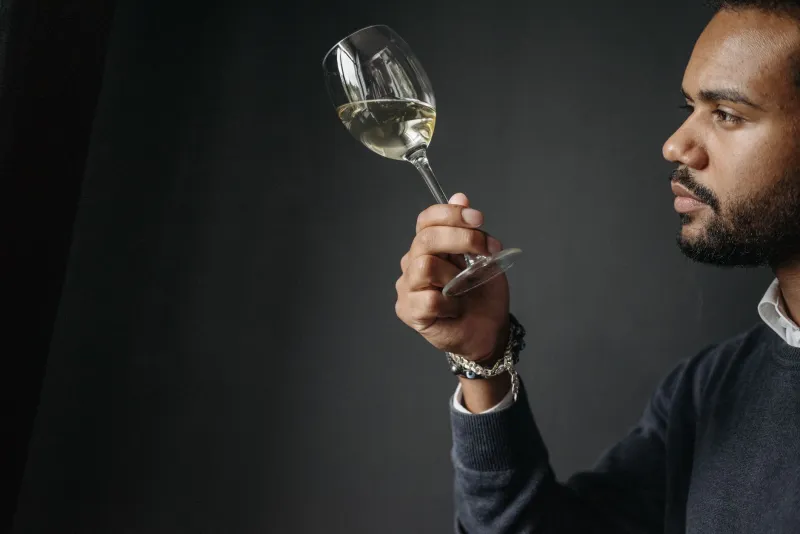
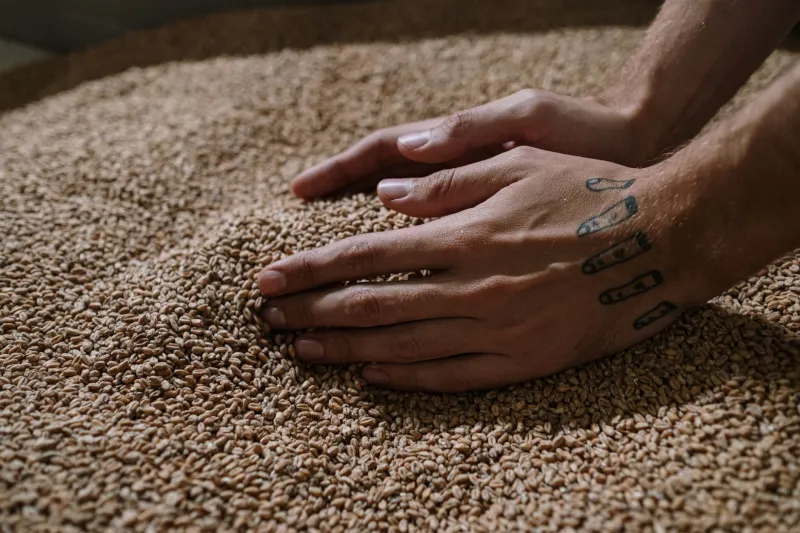
The Art of Stepping Away: How America's Master Blenders Find Clarity in Stillness
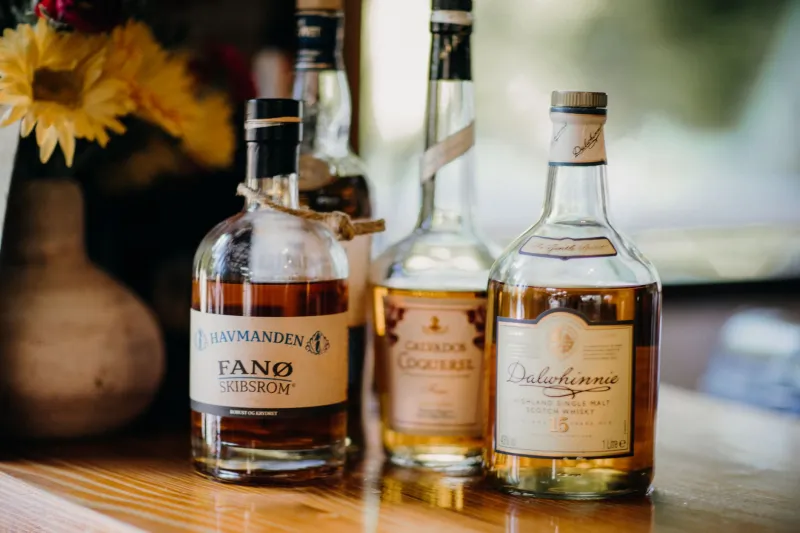
There is a moment, well known to anyone who has spent serious time with a blending paddle in hand, when the nose simply stops working. Not through fatigue alone, but through a kind of sensory saturation—a point at which the palate can no longer distinguish signal from noise. Most drinkers will never witness this threshold. Most blenders, however, live at its edge every single day.
What separates the merely skilled from the genuinely extraordinary, according to a growing number of America's most respected master blenders, is not what happens during a tasting session. It is what happens in the hours and days that follow—the deliberate, almost ceremonial practice of stepping away entirely.
The Discipline of Absence
At a small Kentucky distillery whose bourbon has earned consistent placement on national allocation lists, head blender Maren Calloway begins each major blending cycle not with samples, but with silence. For forty-eight hours before she evaluates candidate barrels for a flagship release, she abstains from coffee, spiced food, and perfumed products. She walks the same wooded trail each morning. She reads novels, never industry literature. She does not visit the rickhouse.
"People assume the work is in the tasting," Calloway explains. "But you can taste all day and hear nothing if you haven't first learned to be quiet yourself. I'm not being mystical about it. The nose is a physiological instrument, and like any instrument, it performs best when it's been allowed to rest and recalibrate."
This philosophy, while not universal, resonates across a surprising breadth of American craft spirits production. From Pacific Northwest single malts to Tennessee whiskeys to small-batch gins crafted in repurposed industrial spaces, a cohort of blenders is reconsidering the very structure of their creative process—placing rest, solitude, and deliberate sensory deprivation at its center.
When the Barrel Speaks Quietly
The science underlying these practices is less esoteric than it might initially appear. Olfactory adaptation—the well-documented phenomenon by which continuous exposure to a stimulus diminishes the brain's response to it—is a genuine constraint on the blender's craft. What is less commonly discussed is the cumulative nature of this adaptation: repeated daily exposure across a production cycle can dull sensitivity not merely to dominant notes, but to the quieter, more elusive compounds that often define a spirit's most memorable qualities.
Denver-based blender and distiller Theo Hargrove, whose American single malt has drawn comparisons to celebrated Scottish expressions, describes the challenge in precise terms. "The big flavors—the vanilla, the oak, the char—those are easy to find. They announce themselves. What I'm listening for are the interactions: the way a particular grain character argues with a specific barrel entry proof, the way two casks that seem incompatible on paper create something entirely new together. Those conversations are whispered. If I'm not quiet enough, I simply don't hear them."
Hargrove takes what he calls a "clearing walk" of no less than three miles before any session he considers consequential. He carries no phone. He speaks to no one. He has, on at least two occasions, delayed a major blending decision by an entire week because he did not feel, as he puts it, "empty enough to receive."
The Ritual Architecture of Great Blending
What emerges from conversations with blenders across the country is not a single method but a collection of personal rituals, each idiosyncratic yet unified by a common conviction: that the act of creation requires as much deliberate emptying as it does active engagement.
Some practitioners favor extended periods of exposure to neutral environments—plain water, unseasoned food, unscented air. Others employ what might be described as sensory counterweights: a long session in a garden, an afternoon of purely visual engagement with art or landscape, any experience that occupies the mind without taxing the nose or palate.
Virginia-based blender and co-founder of a small estate distillery, Priya Sundaram, has developed what she calls a "two-day threshold rule." No final blending decision, regardless of how confident she feels in the moment, is committed to production until she has slept on it twice. "The first day after a tasting, I'm still arguing with the samples in my head," she says. "The second day, I start to hear what they were actually telling me. The third day, I know."
Sundaram credits this practice with one of her distillery's most celebrated releases—a rye expression that initially struck her as too assertive on the spice, but which, after two days of distance, revealed a mid-palate sweetness she had entirely overlooked during the session itself.
Solitude as a Competitive Advantage
In an industry increasingly shaped by data analytics, production efficiency, and accelerated release cycles, the deliberate cultivation of solitude can appear, on its surface, almost countercultural. Yet the blenders who practice it most rigorously are among the most commercially successful in their respective categories—a correlation they find entirely unsurprising.
"There's an enormous amount of pressure in this industry to move fast," acknowledges Calloway. "To release early, to keep the pipeline full, to respond to what the market says it wants right now. But the spirits that endure—the ones people are still talking about in twenty years—those were made by someone who was willing to wait. Not just for the barrel to mature, but for themselves to be ready."
This patience, it bears noting, extends beyond individual sessions. Several blenders interviewed for this piece described annual or semi-annual retreats—ranging from a long weekend in a remote cabin to a full week of travel entirely unrelated to spirits—that they regard as essential maintenance for their most critical professional faculty. The nose, in this formulation, is not merely a biological instrument. It is something closer to a creative sensibility, one that requires cultivation, rest, and the occasional radical interruption.
What the Silence Teaches
For the connoisseur who encounters the finished product—the bottle opened at a dinner table in Chicago or poured carefully in a home cellar in Portland—none of this invisible labor is apparent. A spirit does not announce that it was shaped by a week of deliberate quiet, or that its defining characteristic emerged only after its creator had spent two days walking through the woods.
And yet, many who taste the results with genuine attention report something they struggle to articulate: a sense of coherence, of integration, of a spirit that seems to know exactly what it wants to be. That quality, according to the blenders who spend their careers pursuing it, is not accidental. It is the direct product of a willingness to listen—not only to the barrel, but to the silence that surrounds it.
In the end, the most extraordinary spirits may owe as much to absence as to presence. To the walk not taken toward the rickhouse. To the tasting deferred by a day. To the master blender who understood, perhaps better than anyone, that the most important thing they could do for their work was, occasionally, nothing at all.