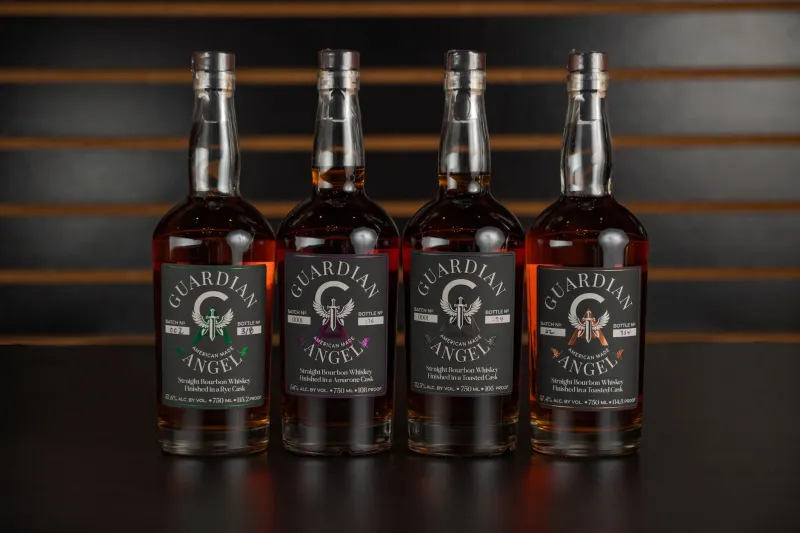
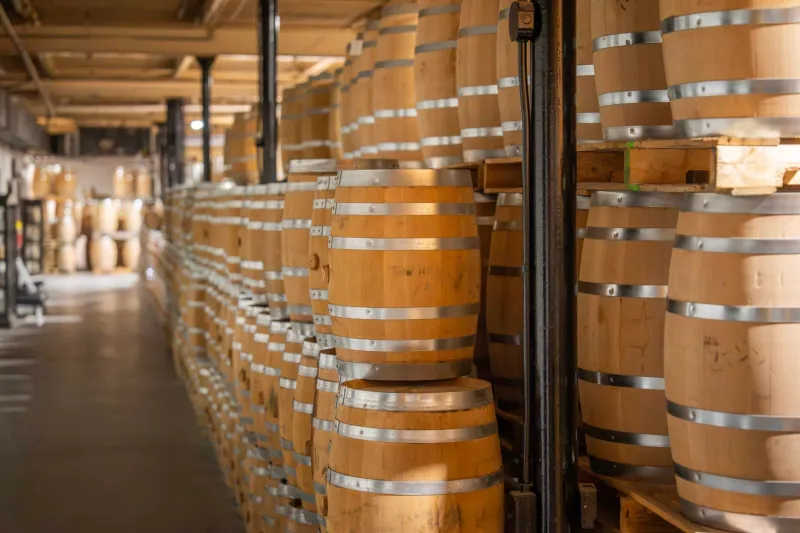
Grain to Glass, Every Inch of It: How Vertically Integrated Distilleries Are Rewriting the Flavor Map
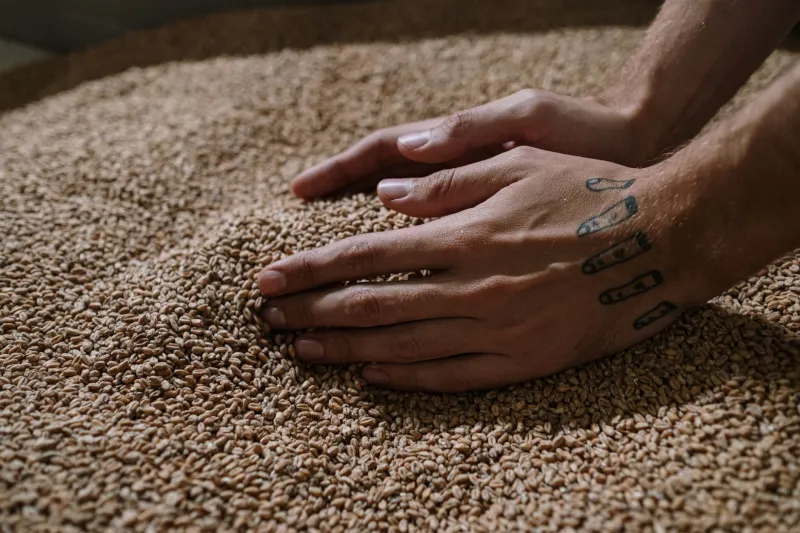
There is a particular kind of confidence required to grow your own barley, malt it on-site, distill it in a copper pot you helped design, age it in barrels sourced from a cooperage two counties over, and then personally load cases onto a delivery truck bound for your state's finest restaurants. It is, by most conventional business logic, an inefficient way to make whiskey. It is also, by nearly every sensory measure, a revelatory one.
Vertical integration—the practice of consolidating multiple stages of a supply chain under a single roof or ownership structure—has long been the province of large industrial producers with the capital to absorb its considerable costs. What is remarkable about the current moment in American craft distilling is the degree to which smaller operations are pursuing this model not out of necessity, but out of conviction. They believe, and are increasingly able to demonstrate, that control at every stage of production yields something qualitatively different from spirits assembled through a patchwork of contracted services.
The Case Against Outsourcing Everything
For much of the early craft distilling boom—roughly 2010 through 2018—a significant number of new American distilleries operated on what the industry quietly called the "sourcing" model. New distillers would purchase bulk neutral grain spirit or aged whiskey from large commodity producers in Indiana or Kentucky, blend and bottle it under their own label, and present it to consumers as a craft product. The practice was legal, occasionally transparent, and commercially practical. It was also, critics argued, a form of flavor abdication.
When a distillery sources its base spirit from an industrial producer, it inherits not only that producer's efficiencies but also its decisions—decisions about grain variety, fermentation temperature, distillation proof, and barrel entry proof that were made to satisfy an enormous and diverse customer base, not a single artisan's vision. The distillery's creative influence begins only at the blending or finishing stage, which is a late and limited intervention.
Contrast that with a distillery that selects a specific heritage grain variety, works directly with a regional farmer to cultivate it under particular soil and climate conditions, malts that grain to a precise moisture specification, and ferments it with a proprietary yeast strain developed over years of iteration. Before a single drop has been distilled, that producer has already accumulated a dense archive of flavor decisions that no sourced spirit can replicate.
Where the Flavor Lives
Distillers who have made the leap toward full integration are consistent in identifying grain selection as the single most consequential variable they reclaimed. "When we started growing our own rye, we immediately encountered flavor compounds we had never tasted before in our distillate," says one distiller operating in the mid-Atlantic region who requested anonymity pending a forthcoming product release. "The spice was more nuanced. There was an almost floral quality we hadn't expected. That came entirely from varietal selection and soil—not from anything we did in the still room."
Malting, the process by which harvested grain is steeped, germinated, and kilned to develop fermentable sugars and enzymatic activity, is another stage where integrated distilleries report dramatic flavor dividends. Commercial maltsters, serving dozens or hundreds of clients simultaneously, operate to broad specifications. An in-house malting floor, by contrast, can be tuned to a distillery's exact preferences—varying germination length, kiln temperature, and peat exposure (where applicable) to develop flavor precursors that will carry through fermentation, distillation, and maturation.
Fermentation, too, rewards close attention. Proprietary yeast strains, longer fermentation windows, and careful temperature management produce wash profiles—the beer-like liquid that enters the still—with greater aromatic complexity. These esters and congeners are the raw material from which distillation extracts its spirit, and their abundance or scarcity at this stage shapes everything that follows.
The Economics of Conviction
None of this comes without cost. Building or retrofitting a maltings requires significant capital investment and dedicated physical space. Contracting directly with farmers requires relationship management, crop risk tolerance, and sometimes premium pricing for specialty varieties. Bottling lines, if owned rather than contracted, demand maintenance expertise and minimum production volumes to justify their expense. Distribution, in states that permit distillery self-distribution, adds logistical complexity that can consume hours better spent on production.
The distilleries navigating these challenges most successfully tend to share several characteristics. They have pursued integration incrementally rather than attempting to capture every stage simultaneously. They have cultivated deep relationships with regional agricultural partners, treating farmers as collaborators rather than vendors. And they have been willing to price their products at levels that reflect genuine production costs—a conversation that requires considerable consumer education in a market still accustomed to commodity spirit pricing.
"We had to be honest with our customers about why our single malt costs what it costs," explains the founder of a Pacific Northwest distillery that now manages its own barley program across two contracted farms. "Once people understood that the grain was grown specifically for us, malted on our floor, and fermented with a yeast we've been cultivating for six years, the price became a story rather than a barrier."
What the Glass Reveals
For the connoisseur, the sensory argument for vertical integration is perhaps the most compelling. Spirits produced through fully integrated processes tend to exhibit what tasters describe as coherence—a quality of internal consistency in which the aromatic, palate, and finish components feel as though they emerged from a single, continuous intention rather than being assembled from discrete parts.
A vertically integrated American single malt, for instance, may present with a nose of fresh-cut grain and stone fruit that flows naturally into a palate of warm baking spice and orchard honey, resolving on a finish of dried herbs and gentle oak. Each element traces back to a specific decision made somewhere along the production chain—a grain variety chosen for its aromatic potential, a fermentation extended to develop fruity esters, a barrel selected for its moderate char level. The spirit tells a coherent story because a single author wrote every chapter.
This is not to suggest that sourced or partially outsourced spirits cannot achieve excellence—many demonstrably do. But the ceiling for expressive specificity is, by definition, lower when key production stages occur beyond a distillery's direct influence.
A Model Worth Watching
The vertically integrated distillery represents something genuinely new in the American spirits landscape: a producer whose ambitions extend not just to what happens inside the still, but to every upstream and downstream decision that shapes the final spirit. It is a demanding model, economically and operationally. It is also, for those with the patience and resources to pursue it, one of the most promising paths toward spirits that are not merely well-made but irreducibly singular.
For enthusiasts seeking bottles that carry the full weight of a producer's convictions—from the field to the label—these are the distilleries deserving of close attention. The flavor they offer is not incidental. It is, in the most literal sense, entirely intentional.