Fermentation and Formula: How American Craft Producers Are Marrying Data With Instinct

Photo by Photo by Paolo Boaretto on Unsplash on Unsplash
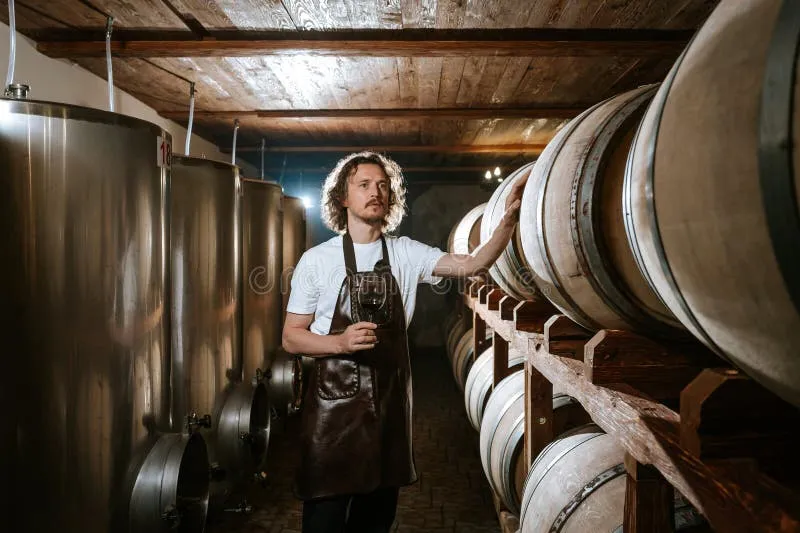
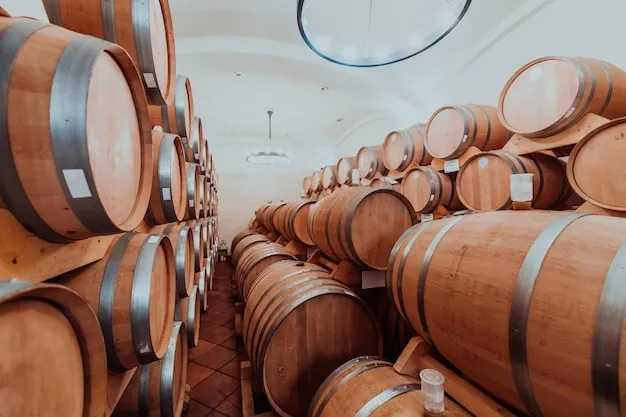
There is a particular kind of silence in a working cellar — the kind that hums with invisible activity. Barrels breathe. Tanks murmur. Fermentation proceeds according to forces that winemakers and distillers have been attempting to understand, codify, and occasionally argue with for centuries. What has changed, in the past decade and with gathering momentum, is the precision with which American craft producers are listening.
Across the country, a cohort of producers — many of them younger, nearly all of them deeply versed in the traditions they are refining — has begun incorporating data-driven tools into their workflows in ways that would have seemed incongruous, perhaps even heretical, to an earlier generation. Fermentation tracking software, real-time temperature analytics, spectrometric soil testing, and humidity sensors are no longer the exclusive province of large industrial operations. They are appearing in hillside caves in Sonoma, converted warehouses in Kentucky, and small-batch distilleries tucked into the hills of the Finger Lakes. The question these producers are answering — carefully, and with considerable nuance — is not whether science belongs in the cellar. It is how much of it to invite in, and on whose terms.
Precision as a Form of Respect
For Margaux Bellard, head winemaker at a small estate in California's Santa Cruz Mountains, the decision to implement fermentation monitoring technology stemmed not from a desire to modernize, but from a profound respect for what she was working with.
"When you're handling fruit from a vineyard that took twenty years to develop its own character, the last thing you want to do is lose a vintage to a temperature spike you didn't catch," she explains. "The sensors don't make the wine. They protect the conditions in which the wine can make itself."
Bellard's operation uses wireless temperature probes throughout her fermentation tanks, feeding data to a centralized dashboard she reviews each morning. Deviations trigger alerts on her phone. But she is quick to clarify that no algorithm tells her when to press or when to punch down. "The data informs my intuition. It doesn't replace it."
This distinction — data as informant rather than authority — surfaces repeatedly in conversations with craft producers who have integrated scientific tools into their practice. There is a deliberate philosophical boundary being maintained, one that separates the use of measurement from the abdication of judgment.
Soil Science and the New Terroir Conversation
Further north, in Oregon's Willamette Valley, a cluster of producers has been collaborating with agronomists to conduct detailed soil mapping across their respective vineyards. The goal is not to homogenize their farming decisions, but to understand the specific mineral compositions, drainage patterns, and microbial communities that distinguish one block from another.
Thaddeus Okafor, who farms a twelve-acre Pinot Noir property outside Dundee, describes the process as revelatory. "We had always known that one corner of the vineyard produced something different — the wine from those rows had a kind of tension to it, almost saline. The soil testing confirmed what we suspected: a distinct clay-limestone interface that exists nowhere else on the property."
Armed with that knowledge, Okafor now farms that section differently — adjusting irrigation timing and cover crop selection to honor what the data revealed. The result is a single-vineyard bottling that has attracted significant critical attention precisely because of its specificity. Science, in this case, did not dilute the sense of place. It deepened it.
Distilling in the Age of Analytics
The conversation extends with equal force into the spirits world, where craft distillers are deploying analytical tools to achieve consistency across batches without surrendering the variation that makes small-production whiskey interesting.
At a grain-to-glass distillery in the Hudson Valley, head distiller Petra Vasquez uses gas chromatography to analyze the congener profiles of her rye whiskey at different points in the distillation run. The data allows her to make more precise cuts — separating heads, hearts, and tails with greater confidence — while also building a historical record that illuminates how seasonal grain differences affect the final spirit.
"Every harvest is different," Vasquez notes. "The rye we source from our partner farm behaves differently depending on rainfall and growing temperatures. The analytics help me understand those differences so I can adapt my process rather than fight the grain."
This adaptive approach — using science to respond more intelligently to natural variation rather than to eliminate it — represents a philosophical maturity that distinguishes the most thoughtful practitioners in this space. The goal is not a perfectly reproducible product in the industrial sense. It is a product that faithfully expresses its ingredients and its moment, achieved with greater reliability.
When Old-World Wisdom Meets New-World Tools
Not everyone in the craft community has embraced this evolution without reservation. Traditionalists point, with some justification, to the risk that an over-reliance on data could gradually erode the sensory engagement that defines great winemaking and distilling. If a producer trusts the dashboard more than the palate, something essential may be lost.
It is a concern that the producers featured here take seriously. Several describe deliberate practices designed to keep their sensory skills sharp — daily barrel tastings conducted before reviewing any analytical data, fermentation decisions made first by smell and texture, later confirmed or challenged by the numbers.
"The data is a second opinion," says Bellard. "A very good second opinion, from a very reliable source. But the first opinion still has to come from here" — she taps her temple, then her chest — "and here."
There is something quietly profound in that formulation. These producers are not choosing between tradition and technology. They are insisting that the two can coexist in a relationship of mutual service, each making the other more effective.
The Cellar as Laboratory, the Laboratory as Cellar
What is emerging across American craft production is a new kind of fluency — one that moves comfortably between the vocabulary of science and the vocabulary of craft, drawing on both without being captured by either. Younger producers, many of them trained in both viticulture or distilling and in data analysis, are particularly adept at this code-switching. They speak of brix and microbial diversity and ester formation with the same ease with which they describe the way afternoon light falls across a particular slope, or the way a barrel begins to give back what it has taken after three years of aging.
This fluency is, in many ways, the defining characteristic of American craft production in the current era. It is a tradition of innovation that reaches back to the earliest days of domestic winemaking and distilling — the conviction that inherited wisdom is most honorably expressed not by replication, but by intelligent extension.
The cellar, in this rendering, becomes something like a laboratory in the best sense: a place of careful observation, rigorous inquiry, and genuine wonder. The science does not diminish the mystery. It gives the mystery a more precise address.