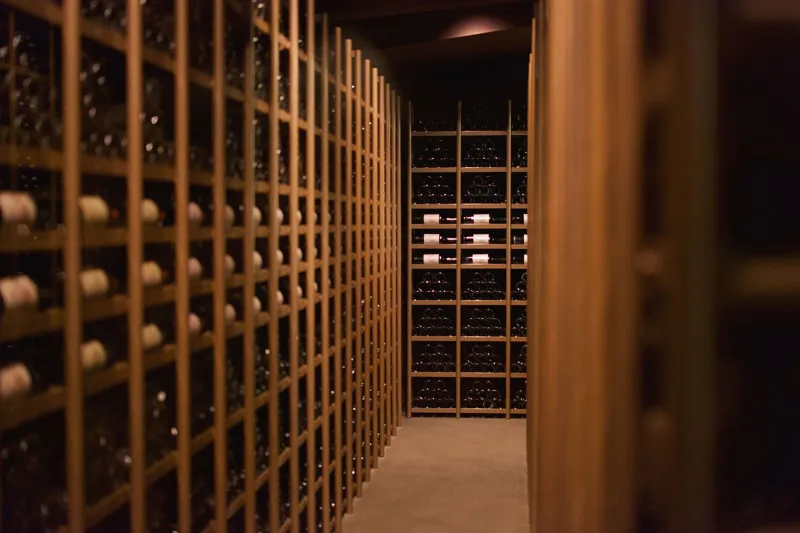
Drink What You Love: The Case for Building a Cellar Around Your Own Palate
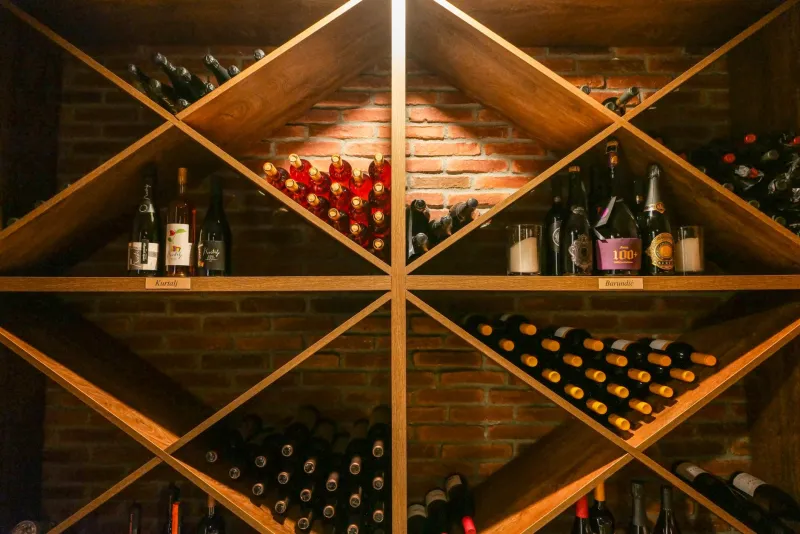
There is a particular kind of buyer's remorse that visits collectors who have spent years assembling a cellar they feel they ought to have rather than one they genuinely want. Shelves lined with allocated Napa Cabernets purchased at secondary-market premiums. Rows of single malts acquired because a publication declared them essential. Bottles that look impressive in inventory spreadsheets but are rarely, if ever, opened. It is a common affliction, and it stems from a fundamental confusion: mistaking the market's preferences for one's own.
The alternative — building a collection anchored in personal taste — is easier to describe than to practice. The noise surrounding wine and spirits is relentless. Scores, allocations, auction records, and social media consensus create a gravitational pull that can quietly override individual judgment. Yet the collectors and sommeliers who have found the deepest satisfaction in their cellars are almost uniformly those who learned, sometimes through costly detours, to resist that pull.
The Market Is Not Your Palate
Understanding the distinction between market value and personal value is the first discipline of intentional collecting. A bottle that commands $400 at auction is not, by that fact alone, a bottle you will enjoy. Conversely, a $35 Chenin Blanc from the Loire Valley or a craft rye whiskey from a small-batch Ohio distillery may deliver precisely the experience you seek at a fraction of the cost — and with none of the anxiety that attends opening something you purchased as an investment.
Sommeliers who work closely with private collectors observe this tension constantly. Many clients arrive having done exhaustive research on what the market considers desirable and almost none on what they themselves find compelling in a glass. The most useful first conversation, many of them note, is not about regions or producers but about the last bottle a client truly loved — and why.
That question — why did I love this? — is the engine of a well-considered cellar. It demands a vocabulary, however informal, for what pleases you: the weight of a wine on the palate, the interplay of fruit and earth, the way a long-aged spirit develops secondary flavors that a younger expression cannot approximate. Developing that vocabulary takes time and deliberate tasting, but it is the foundation on which every worthwhile acquisition rests.
Starting With Honest Self-Assessment
Before purchasing a single bottle with collection intent, experienced collectors recommend a period of structured self-education. This does not require formal coursework, though resources like the Wine & Spirit Education Trust (WSET) or the Court of Master Sommeliers can be valuable. It requires, more fundamentally, paying close attention to what you are drinking and recording your responses honestly.
Keep a tasting journal — physical or digital — and resist the temptation to calibrate your notes against published scores. Write down what you perceive, what you enjoy, and what leaves you indifferent. Over months, patterns will emerge. Perhaps you are consistently drawn to wines with pronounced acidity and mineral character: white Burgundy, Chablis, Grüner Veltliner, dry Riesling from the Finger Lakes. Perhaps you find yourself returning to aged expressions of American whiskey with high rye content, appreciating their spice and structure over the sweeter profiles of wheated bourbons. These patterns are the architecture of your cellar.
Collectors who undertake this exercise often discover that their genuine preferences diverge meaningfully from what the market currently rewards. That divergence is not a problem. It is, in many cases, an advantage.
The Counterintuitive Economics of Personal Preference
There is a persistent assumption that collecting for personal enjoyment and collecting for long-term value are opposing strategies. The evidence suggests otherwise. Collectors who buy what they love tend to purchase with more patience and less panic. They are less susceptible to the fear-of-missing-out dynamics that drive secondary-market premiums on allocated releases. They are more likely to hold bottles through the awkward middle years of a wine's development rather than selling prematurely. And because they are buying in categories they understand intimately, they are better positioned to identify undervalued producers before broader market recognition arrives.
Consider the trajectory of domestic Pinot Noir from Oregon's Willamette Valley. Collectors who were drawn to its elegance and Burgundian sensibility in the early 2000s — not because it was fashionable, but because it genuinely pleased them — assembled holdings that have appreciated substantially as the region gained international recognition. The same pattern has played out with American single malt whiskey, with aged agricole rum, with natural wine producers in regions like the Santa Barbara Highlands and the Finger Lakes. In each case, early adopters were not trend-forecasters. They were people who simply found something they loved before the market caught up.
Building With Intention, Not Obligation
An intentional cellar is not a static archive. It is a living collection that evolves as your palate deepens and your understanding of specific regions and producers grows. This means that acquisition decisions should be made with genuine purpose: each bottle should answer a specific question about your cellar's gaps, represent a producer whose work you have tasted and admired, or mark a vintage you have reason to believe will develop in a direction you find compelling.
It also means being willing to edit. A cellar that has drifted toward market-driven purchases benefits from an honest audit. Bottles acquired out of obligation rather than desire can be traded, sold, or gifted — freeing both physical space and mental bandwidth for acquisitions that actually align with your preferences. Several collectors describe this editing process as the moment their cellar began to feel coherent, a genuine expression of who they are rather than a curated performance for visitors.
Sommeliers often advise clients to apply a simple test before any significant purchase: if this bottle were impossible to resell, would you still want it in your cellar? If the honest answer is no, the acquisition is being driven by the market rather than by taste. That is not always the wrong choice, but it should be a conscious one.
The Cellar as Conversation
Ultimately, the most compelling argument for building around personal preference is experiential rather than financial. A cellar assembled with genuine intention becomes a record of curiosity, of the producers and regions that have captured your attention over years, of vintages that marked particular moments in your life. Opening a bottle from such a collection is an act of reconnection — with a place, a producer, a decision made in good faith about something you genuinely valued.
The market will always have opinions. Point scores will be published, allocations will be announced, and secondary prices will fluctuate. None of that needs to govern your cellar. The most extraordinary bottles are, in the end, the ones you actually want to open — and that determination belongs entirely to you.